Introduction
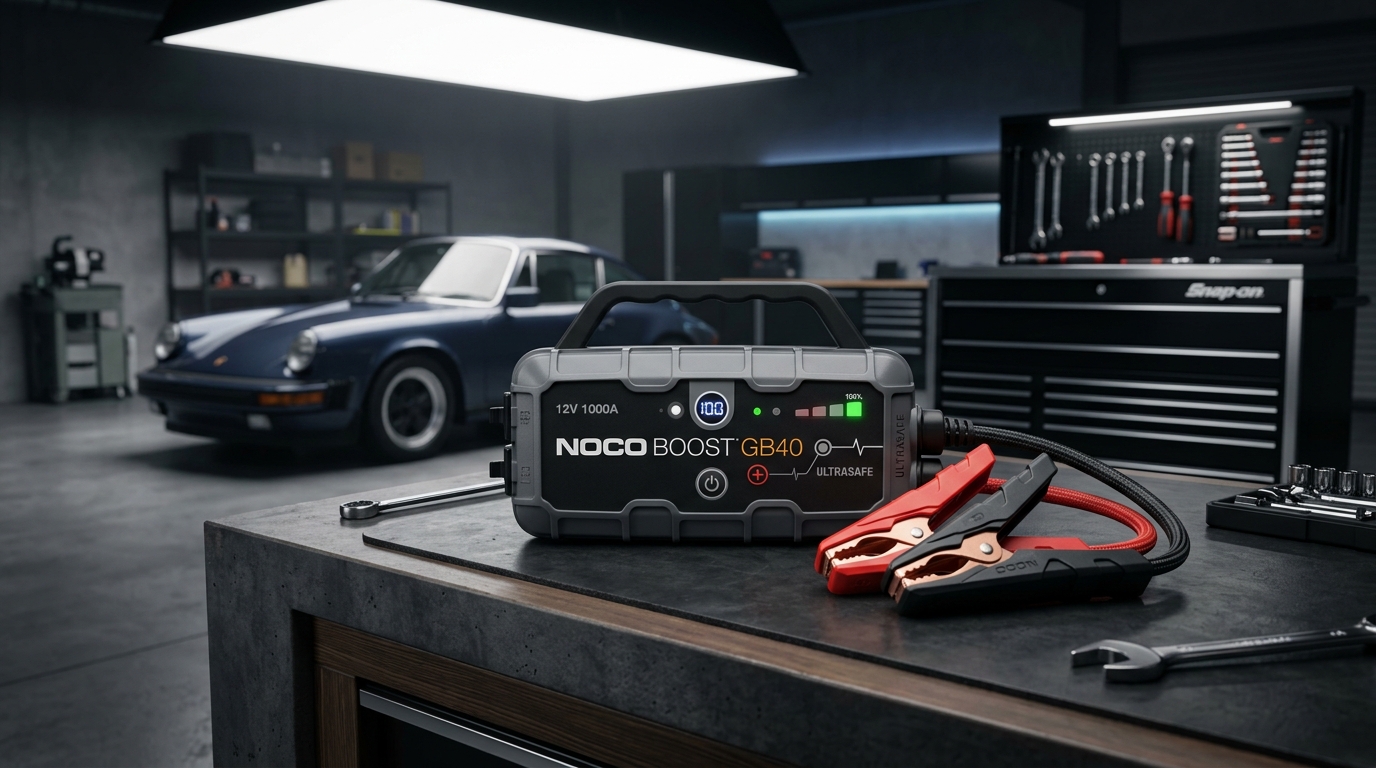
A dead battery has a way of showing up at the worst possible time, and traditional jumper cables come with their own set of hassles — needing a second car, dealing with tangled cables, and hoping the connections are made correctly. The NOCO Boost GB40 is built around solving that specific problem differently, offering a compact, self-contained lithium jump starter that doesn’t require a second vehicle at all. This article goes through what the GB40 actually offers, how it tends to get used in real roadside and driveway situations, who it’s probably worth buying for, and a handful of practical points worth knowing before it ends up living in your glove compartment or trunk.
As with the other product breakdowns in this series, this isn’t about declaring it the single best jump starter on the market — it’s about laying out exactly what it does so you can weigh it against your own vehicle and situation.
Key Features
1000-amp peak output. This rating generally reflects the device’s ability to deliver a strong burst of power needed to start an engine, with the GB40 specifically rated for gas engines up to 6.0 liters and diesel engines up to 3.0 liters.
UltraSafe design. NOCO’s UltraSafe branding refers to a set of built-in protections intended to make the jump-starting process safer for less experienced users, generally including safeguards against common mistakes during connection.
Spark-proof technology. This feature is designed to prevent sparking when connecting the clamps to a battery, which is particularly relevant given that traditional jumper cables can sometimes produce sparks during connection, a genuine safety concern near a car battery.
Reverse polarity protection. Built specifically to prevent damage if the clamps are accidentally connected backward, this feature is aimed at reducing the risk of harming the vehicle’s electrical system or the jump starter itself due to a simple connection mistake.
Lithium battery construction. Rather than the heavier lead-acid batteries found in older-style jump starters, the GB40 uses lithium battery technology, generally resulting in a lighter, more compact device that’s easier to store and carry.
Power bank functionality. Beyond jump-starting a vehicle, the device can also function as a portable power bank, generally used to charge phones or other USB-powered devices when needed.
100-lumen LED flashlight. A built-in flashlight is included, offering a practical secondary use case for roadside situations, nighttime emergencies, or general utility around a vehicle or campsite.
Compact, portable size. Compared to traditional jumper cables or older jump starter designs, the GB40 is generally built to be small enough to store easily in a glove compartment, trunk, or even a backpack.
How It Can Be Used
The primary use case is jump-starting a vehicle with a dead battery without needing a second car or a good Samaritan willing to help, which is particularly useful in situations like a parking lot, driveway, or remote location where finding another vehicle isn’t practical.
The spark-proof and reverse polarity protection features are generally relied upon throughout the connection process, aimed at reducing the risk of a mistake during a task that can otherwise feel intimidating for those unfamiliar with jump-starting a car.
Because it’s rated for both gas engines up to 6.0 liters and diesel engines up to 3.0 liters, the GB40 is commonly used across a fairly broad range of vehicle types, from smaller passenger cars to larger trucks or SUVs, though it’s worth confirming compatibility with a specific vehicle’s engine size before relying on it.
The power bank function is often used separately from jump-starting entirely, letting the device charge a phone or other small electronics during travel, camping, or any situation where a traditional outlet isn’t available.
The built-in flashlight is commonly used during nighttime roadside situations, whether that’s illuminating an engine bay to make the jump-starting connection, or simply providing light during a general emergency or outdoor activity.
Given its compact, portable design, the GB40 is often kept in a vehicle’s glove compartment or trunk long-term, ready for use whenever a dead battery situation arises rather than needing to be sourced or borrowed in the moment.
Who It May Be Suitable For
Anyone wanting to avoid relying on someone else’s car for a jump-start. The self-contained design means a dead battery doesn’t require flagging down another driver or waiting for roadside assistance, which particularly appeals to those who drive alone often or in less populated areas.
People less experienced with jump-starting a car. The UltraSafe features, including spark-proof and reverse polarity protection, are specifically aimed at reducing the risk of mistakes for those who aren’t entirely confident in the traditional jumper cable process.
Drivers of larger vehicles like trucks or SUVs with diesel engines. Given its rating for diesel engines up to 3.0 liters, this device may particularly suit those with larger vehicles where a smaller, less powerful jump starter wouldn’t be sufficient.
Those who want a multi-purpose emergency tool. Because it also functions as a power bank and flashlight, this device may appeal to those wanting one compact tool covering several potential emergency or travel scenarios rather than carrying separate devices.
Frequent travelers or those in remote areas. For anyone who spends time in locations where roadside assistance or nearby help isn’t readily available, having a self-contained jump starter on hand adds a meaningful layer of preparedness.
Those with very large diesel trucks or commercial vehicles exceeding the GB40’s rated engine size may need a more powerful, higher-capacity jump starter model better suited to those specific vehicle requirements.
Important Things to Consider
Engine size compatibility. It’s important to confirm that a specific vehicle’s engine falls within the GB40’s rated range (up to 6.0L gas or 3.0L diesel) before relying on it, since exceeding that range may result in insufficient power to start the engine.
Battery maintenance and charging. Like any lithium battery device, the GB40 requires periodic recharging to remain ready for use, and it’s worth developing a habit of checking its charge level periodically rather than assuming it’s always ready in an emergency.
Storage temperature considerations. Lithium batteries can be sensitive to extreme temperatures, so it’s worth being mindful of how and where the device is stored, particularly in vehicles that experience very hot or very cold conditions depending on climate and season.
Understanding proper connection procedure. While the UltraSafe features reduce certain risks, it’s still worth reading through the included instructions to understand proper clamp placement and connection order before needing to use the device in an actual emergency.
Not a substitute for addressing a failing battery. While useful for occasional dead battery situations, a jump starter isn’t a long-term solution for a vehicle with a battery that’s failing regularly, which generally indicates the battery itself needs replacement or the vehicle’s charging system needs inspection.
Device size relative to power output. While compact, it’s worth understanding that this specific model is sized and rated for the vehicle types mentioned, and expectations should be set accordingly rather than assuming unlimited jump-starting capability for any vehicle size.
Comparison of General Categories
Compact lithium jump starters, the category the GB40 belongs to, generally offer a lighter, more portable alternative to older-style jump starters, with added safety features aimed at reducing user error during connection.
Traditional lead-acid jump starters are generally heavier and bulkier than lithium alternatives, though they can sometimes offer higher power output for larger vehicles or more demanding starting conditions.
Standard jumper cables require a second running vehicle to provide power, offering a lower-cost option but relying entirely on having another car and driver available at the time of need.
Roadside assistance services provide professional help for dead batteries and other vehicle issues, generally involving a wait time for a technician to arrive, compared to the immediate, self-contained solution a jump starter provides.
Larger, higher-capacity jump starters are built for bigger vehicles, commercial trucks, or more demanding starting conditions, generally offering more power at the cost of a bigger, less portable device compared to a compact model like the GB40.
The right category generally depends on typical vehicle size and engine type, how much portability and compact storage matters, and whether additional features like a power bank or flashlight add meaningful value for a given person’s typical driving situations.
Frequently Asked Questions
What size engines is the GB40 rated for? It’s rated for gas engines up to 6.0 liters and diesel engines up to 3.0 liters, covering a fairly broad range of common passenger vehicles, trucks, and SUVs.
Does it require a second vehicle to work? No, that’s the core advantage of a self-contained jump starter like this one — it doesn’t require a second running vehicle the way traditional jumper cables do.
What does spark-proof technology actually do? It’s designed to prevent sparking during the connection process, addressing a safety concern that can occur when connecting clamps to a vehicle battery with traditional methods.
Can it charge my phone as well? Yes, the GB40 includes power bank functionality, allowing it to charge phones or other USB-powered devices in addition to its primary jump-starting function.
Does it include any kind of light source? Yes, it has a built-in 100-lumen LED flashlight, useful for nighttime roadside situations or general utility purposes.
How often does it need to be recharged? Like any lithium battery device, it requires periodic recharging to stay ready for use, and checking its charge level regularly is a reasonable habit to maintain preparedness.
Is it safe for someone who has never jump-started a car before? The UltraSafe features, including reverse polarity protection and spark-proof design, are specifically intended to reduce common risks and mistakes, though reading the included instructions beforehand is still recommended.
Conclusion
The NOCO Boost GB40 combines a 1000-amp lithium jump starter with UltraSafe protections, a power bank function, and a built-in LED flashlight into one compact, self-contained device rated for gas engines up to 6.0L and diesel engines up to 3.0L. Its spark-proof and reverse polarity protection features are specifically aimed at making the jump-starting process safer and more approachable, particularly for those less experienced with traditional jumper cables.
Whether this specific device fits your needs depends on your vehicle’s engine size, how often you find yourself in situations where a second vehicle isn’t readily available, and how much value you place on additional features like the power bank and flashlight. For those wanting a portable, self-reliant solution to dead battery situations, the GB40 offers a fairly comprehensive set of features built around everyday roadside preparedness.